Annual Theme 2026
Defining Democracy – Describing Democracies – Comparing Democracies
The inaugural theme of the Hannah Arendt Fellowships explores democracy simultaneously as a historical experience and an evolving social practice. Rather than treating democracy as a single normative ideal, the programme approaches it as a multifaceted phenomenon that has taken different forms across times and societies, and that continues to transform dynamically today. The objective is to analyse democracy both in its historical depth and its global diversity.
This tripartite framework provides a structuring impulse for diverse disciplinary approaches across the humanities and social sciences. It encompasses the conceptual history of what democracy was, is, or could be, the analysis of institutional orders and forms of participation, and the exploration of ancient, pre-modern, or non-Western democratic traditions. It also addresses contemporary tensions such as the relationship between democracy and authoritarianism, disinformation, representation, or the role of media, language, and symbolism in democratic life.
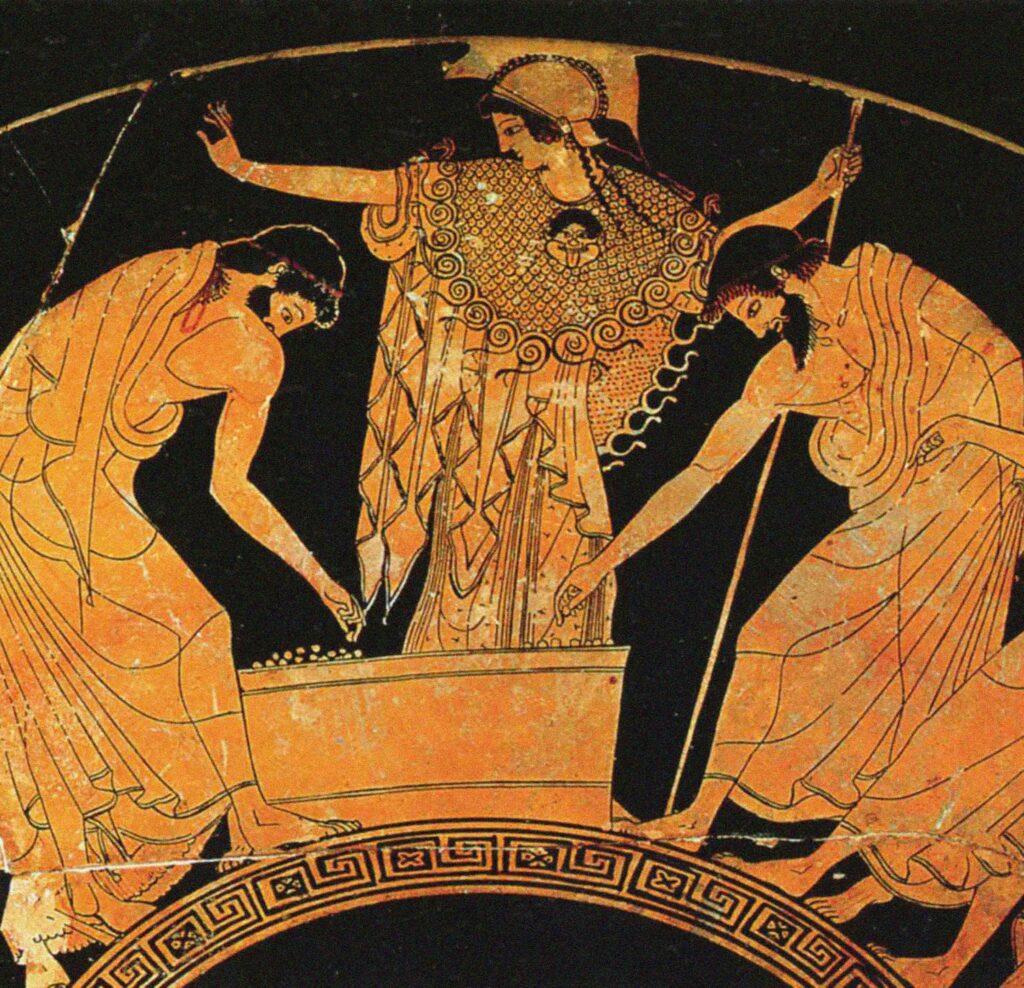
An early allegory of democratic decision-making: Athena supervises the vote over the arms of Achilles. Attic cup, c. 490 BC. © Fine Art Images / Heritage Images, via Getty Images
Hannah Arendt Fellowships 2026
Aggrieved Entitlement and the Radicalization of Young Men
Prof. Kristin J. Anderson, Ph.D., and Prof. Dr. Alexander De Juan | Osnabrück University
Arts and Democracy: Reconsidering Political Aesthetics in the 21st Century
Mateo Belgrano, Ph.D., and Jun.-Prof. Dr Gesa Wellmann | University of Oldenburg
“Liberal Democracy” in Europe, 1989–2025: Conceptual Transformations and Political Contestations
Hugo Bonin, Ph.D., and PD Dr Benjamin Möckel | University of Göttingen
Yazidi Digital Vernacular Archives and the Ethics of Memory: Visual Culture, Conflict, and Civic Transformation in Lower Saxony & Iraq
Nathaniel Brunt, PhD., and Prof. Dr Ina Blümel | TIB Hannover
Visualising Democracy’s Fault Lines: AfD’s Gendered TikTok Campaigns and Young Voters
Dr Fabienne Lind and Jun.-Prof. Dr Christine E. Meltzer | HMTMH Hannover
The Roots of Ancient Greek Democracy
Assoc-Prof. Mait Kõiv, Ph.D., and Prof. Dr Gunnar Seelentag | Leibniz University Hannover
Envisioning Language(s) – Linguistic Disobedience in the Democracies of the Future
Prof. David Gramling, Ph.D., and Dr Jacqueline Gutjahr | University of Göttingen
“The Voice of the People” – Democracy and Ochlocracy in Biblical Literature
Assoc-Prof. Gili Kugler, Ph.D., and Prof. Dr Reinhard Müller | University of Göttingen
Democratic Futures: A Comparative Analysis of Democratic Cultural Codes in the U.S. and Germany
Jason Mast, Ph.D., and Prof. Dr Sebastian Schnettler | University of Oldenburg
Bridges and Borders of Democracy: A Dynamic Investigation into Attitudes and Relationships of German-Dutch Neighbours in the North
Prof. Marije Michel, Ph.D., and Prof. Dr Juliana Goschler | University of Oldenburg