About

The Hannah Arendt Fellowships are an international fellowship programme supporting outstanding research in the humanities, cultural studies, and social sciences.

Launched by the State of Lower Saxony in 2026, the Hannah Arendt Fellowships strengthen academic exchange, open up new scholarly perspectives, and enhance the visibility and connectivity of excellent research across the region. Funded within the framework of zukunft.niedersachsen – a joint initiative of the Lower Saxony Ministry of Science and Culture and the Volkswagen Foundation – the programme is coordinated by the Göttingen Academy of Sciences and Humanities in Lower Saxony.

/ Programme Structure and Regional Network

Each year, up to ten fellows from different countries and career stages join the programme. They undertake a research stay of up to six months, typically during the summer semester in Germany (around April to September). Hosted by universities, universities of applied sciences, and other publicly funded research institutions across Lower Saxony, fellows become part of a diverse and vibrant academic landscape.

The programme’s decentralised structure highlights the breadth and strength of research across the region while creating opportunities for collaboration between institutions and disciplines. A defining feature is the tandem model: each fellow works closely with a local academic host whose expertise aligns with their own research interests. These partnerships may build on existing academic networks or emerge through new connections between international researchers and local experts.

Embedded in the local research environment and free from teaching obligations, fellows can fully focus on their independent projects. To support a successful stay, the fellowships provide comprehensive financial support, including individual scholarships or other funding arrangements with the fellow's home institution, family allowances where applicable, travel reimbursements, and support at the host institution. Regular joint colloquia in Göttingen, workshops, and public events provide opportunities to share perspectives, engage with broader scholarly communities, and establish lasting international networks.

/ Annual Cohorts

To reflect the programme’s diversity of disciplines, methodologies, and fields of expertise, each cohort of up to ten fellows and their tandem partners is organised around an annual theme. Each theme provides a shared field of inquiry that addresses topical scholarly and societal questions while encouraging open dialogue, such as “Democracy” (in 2026) and “Humans & AI” (in 2027).

The annual themes are developed by an independent, multidisciplinary, and internationally composed selection committee, which is also responsible for selecting the fellows. Calls for applications are typically published in spring for the following fellowship year.

Research across Lower Saxony

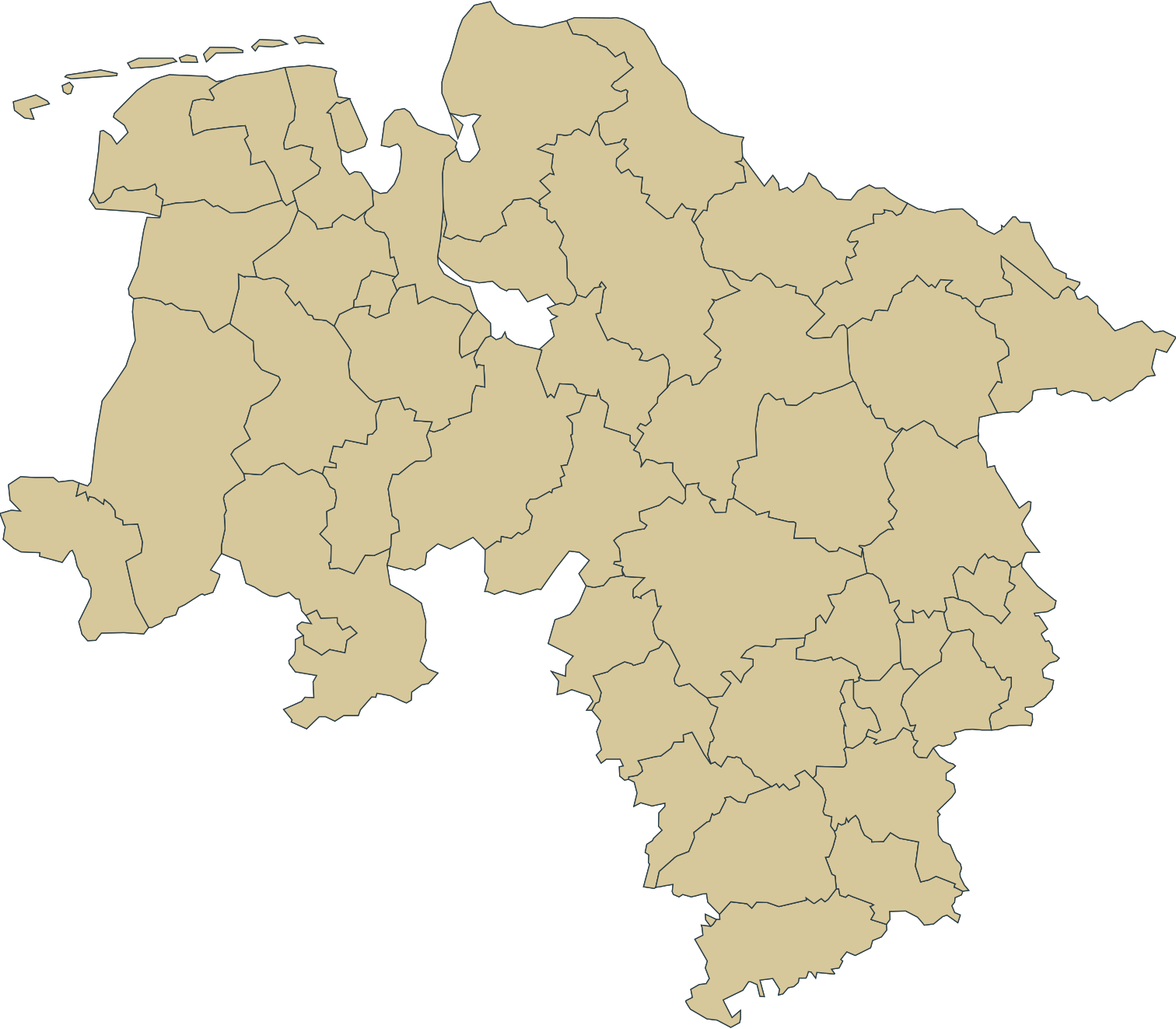
Map of Lower SaxonyThe Hannah Arendt Fellowships connect international researchers with academic institutions across Lower Saxony. Discover the participating institutions under Hosts

Hannah Arendt (1906–1975)

Portrait of Hannah Arendt. Getty Images

© Fred Stein Archive, Archive Photos, via Getty Images

The fellowship programme embodies the spirit of its eponym, the Hannover-born intellectual and political theorist known for her profound contributions to both the humanities and social sciences. Launched around the 50th anniversary of her passing on 4 December 1975, the fellowships honour her legacy of rigorous, independent, and open inquiry.

While the programme is inspired by Arendt’s intellectual ethos, it does not require projects to focus on her life or writings – though if relevant, drawing on her work is of course welcome.