Jason Mast, Ph.D.

Hannah Arendt Fellowship 2026 “Democracy”

Senior Fellowship | Politics, Civil Society, Culture and Cognition

Dr Jason L Mast researches how varieties of populism have pulsed through Western democracies and upended their commitments to maintaining democratic norms, multicultural civil societies, and postwar institutions governing international trade and security arrangements. His writings on the U.S. case can be found in the edited volumes Populism in the Civil Sphere (2021, Polity) and Politics of Meaning /Meaning of Politics: Cultural Sociology of the 2016 U.S. Presidential Election (2019). Coauthored with Daniel Šuber, his research on the German case, “Societalized Politics in the German Civil Sphere: The 2015 “Refugee Crisis” and Post-Potsdam Civil Backlash” (2024), can be found in the International Journal of Politics, Culture, and Society. Mast also examines how recent developments in cognitive psychology, evolutionary biology, and neuroscience are changing how social scientists are theorizing the intersections between mind, culture, and society, as illustrated in his article “Representationalism and Cultural Cognitivism” (2020, American Journal of Cultural Sociology).
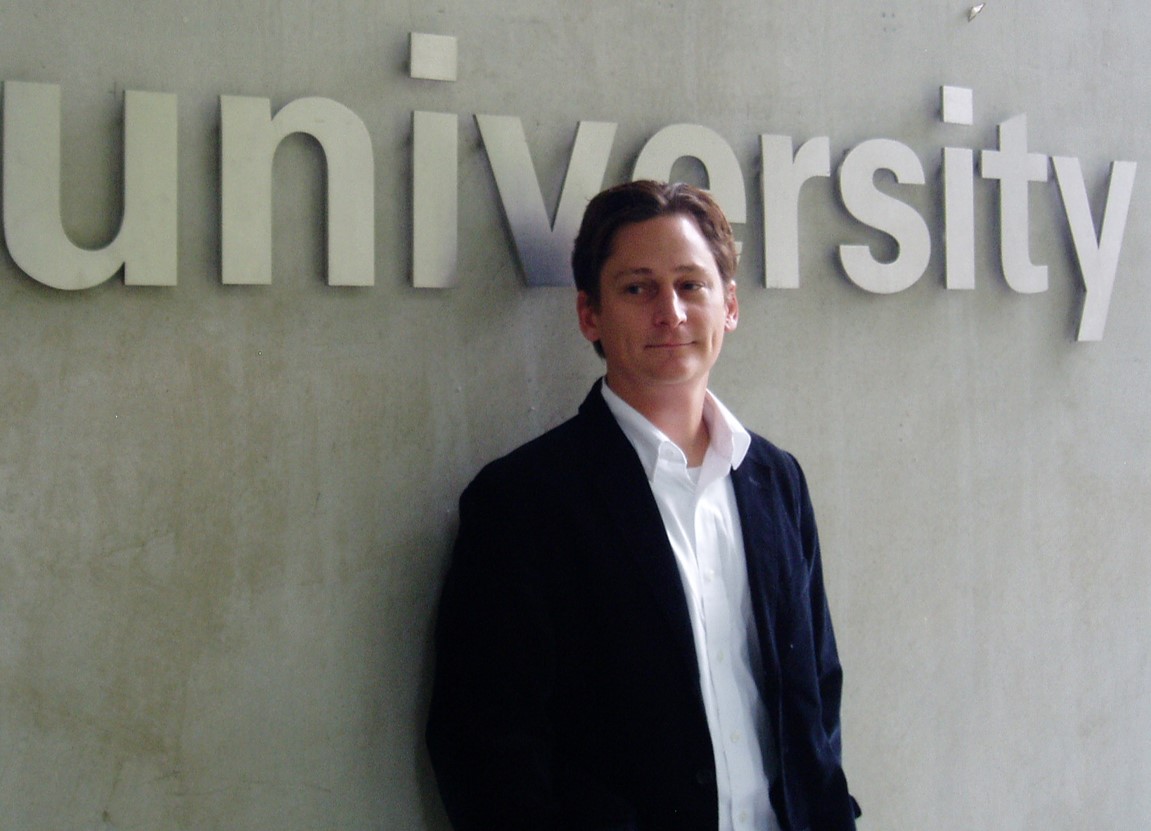
Jason Mast, Ph.D., Hannah Arendt Fellow 2026

/ Democratic Futures: A Comparative Analysis of Democratic Cultural Codes in the U.S. and Germany

Recently, western democracies have been wracked by unanticipated swells of populism, ethnonationalism, and isolationism, all of which have greatly unsettled the neoliberal, globalist, and multicultural trajectories many assumed were durable and determined. The shock produced by events like Donald Trump’s two victories in U.S. presidential elections and the successes of the Alternative for Deutschland’s (AfD) in Germany – as well as the electoral successes of parties such as UKIP or Reform UK, the Sweden Democrats, the Party of Freedom in the Netherlands, the National Rally in France, the Brothers of Italy, and Vox in Spain – indicate that taken for granted cultural assumptions about democracy are not only being called into question but upended. We interpret these developments theoretically as representing severe challenges to the fundamental cultural elements that control, anchor, and organize liberal, western democratic social orders. Titled Democratic Futures, in this research project, we are examining the scope and intensity of these challenges in two nations, namely, in the U.S. and Germany.

An evolving body of literature on these and similar events has been characterizing contemporary western democratic publics as wracked by forces of fragmentation, as deeply polarized, and as increasingly prone to embracing a politics of rupture and irrationality. In Democratic Futures, we are examining how and to what extent these forces are placing the American and German democratic normative orders under great strain. In the U.S. case, we are focusing on the campaigns staged during the run-up to the 2024 U.S. presidential election. In the German case, we are looking at how these forces influenced the 2025 federal election.

Through this research we seek to assemble an innovative mixed methods design. We are using the qualitative method of structural hermeneutics to examine manifestations of durability and strain in both of the research sites. Additionally, for each empirical case, we are conducting a computational hermeneutic analysis, or an assemblage of methods afforded by large language models and AI platforms, which combine to enable us to analyze a large and ever-expanding online universe of text corpora consisting of newspaper archives, television transcripts, Twitter (X) comments, political blogs, and political speeches, for instance. Through this effort, we aim to design a mixed methods approach that will accentuate these methods’ strengths while minimizing the effects of their weaknesses.

/ Projekt Activities

Host

Carl von Ossietzky University Oldenburg, logo

Partner

Prof. Dr Sebastian Schnettler, tandem partner 2026

© Leona Hofmann, Universität Bremen

Prof. Dr Sebastian Schnettler

Prof. Sebastian Schnettler’s research is guided by a methodological perspective that draws mainly on quantitative social research methods and, theoretically, by an interdisciplinary behavioral science that draws on insights from the social sciences, biology, and other natural sciences, as illustrated in his publications in the areas of social networks, family, and population research. Prof. Schnettler’s methodological repertoire introduces innovative quantitative and computational dimensions to this study’s analysis of populism, civil and political discourse, and democratic futures.