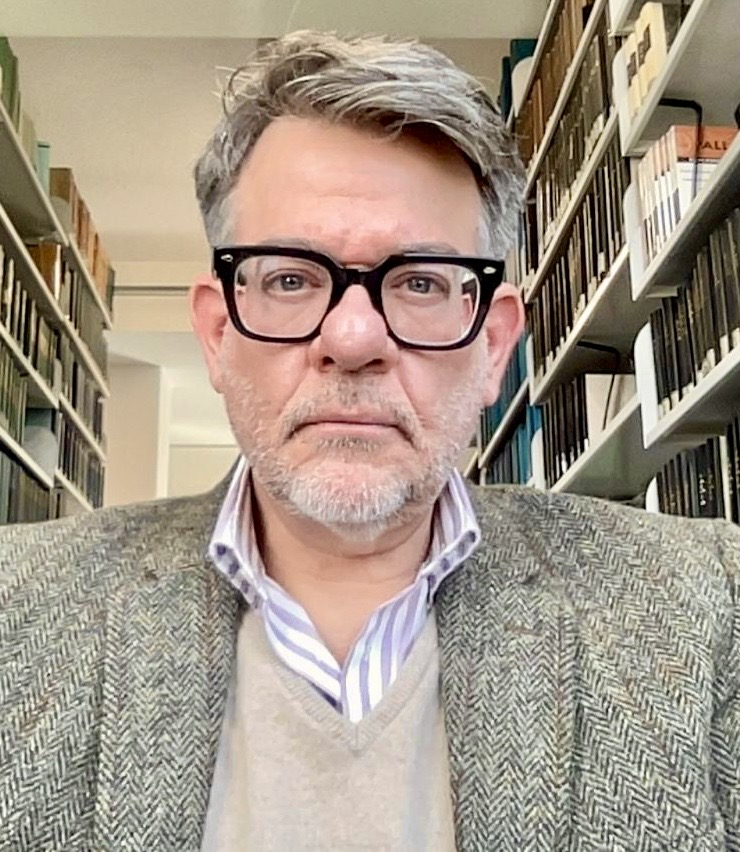
Assoc-Prof. Dr Mait Kõiv

Hannah Arendt Fellowship 2026 “Democracy”

Senior Fellowship | Social and Political History of Ancient Greece, Oral Traditions and Ancient Historiography

Born in Tallinn, Estonia. Studied history at the University of Tartu. Master degree in 1992 with the thesis ‘Charillos of Sparta and Pheidon of Argos: a study on the beginning of Greek Tyranny,’ and doctoral degree in 2003 with the thesis ‘Ancient tradition and early Greek history. The origins of states in early-archaic Sparta, Argos and Corinth,’ published as a monograph in the same year. He has worked as a history teacher in secondary schools in Tallinn, and as an associated professor for history at the University of Tallinn. Since 2004 he works as an associated professor for Ancient History at the University of Tartu. Has written textbooks on history for primary and secondary schools, and published numerous articles on the formation and reliability of the accounts of ancient historians, on the social and political development of early Greece, and on the comparison of the ancient Greek and Near Eastern societies. The current project concerns the formation of participatory communities in early Greece, enabling the establishment of classical democracies.
Personal profile on etis.ee

Assoc-Prof. Dr Mait Kõiv, Hannah Arendt Fellow 2026

/ The Roots of Ancient Greek Democracy

The project is focused on the development of social structure, economic conditions, political systems and ideological frameworks developing in Ancient Greece during the early Iron Age and Archaic period (11th–6th centuries BCE), i.e. the processes which produced the following establishment of Classical Greek democracies.

The emergence of the Greek democracies has been traditionally viewed as an almost revolutionary process replacing the earlier hierarchical systems and transferring the power from the previously ruling elites to the masses of free citizens. This view tends to neglect the role of the sub-elite circles (demos – the people) in the earlier Archaic poleis. The present research pays full attention to the evidence for the social and military significance and political participation of the commoners in the early period, and discloses their importance in the formation of poleis as participatory communities. The research reveals the economic, social, political and ideological factors producing the eventual establishment of Ancient Greek democracies. It discloses the strategies enabling the early Greek poleis to keep social hierarches under control, to preserve and confirm the relatively egalitarian society and foster the commoners’ participation in politics. This produced sociopolitical systems unprecedentedly democratic in the history of early civilisations, though at the costs of excluding broad categories of people (women, slaves) from public sphere or even freedom. The research explores the natural connection between the restricted social hierarchies among the free community members, the participation of commoners in the political sphere, the ideology of shared responsibility, and the limited success of the authoritarian rulers.

The conclusions concerning the Ancient Greek world are instructive for meeting the challenges faced by the democracies in the present world. The mutual dependence between relative social equality and democracy revealed by the research demonstrates the importance of keeping the social hierarchies under control for securing the effective involvement of the people in making political decisions. It points out the crucial importance of a firm social standing of the citizens as well as the need for creating social narratives that emphasise egality and shared responsibility, and demonstrates how the inclusionary strategies will enable the communities to resist the establishment of authoritarian regimes. This highlights the question of the optimal strategies of safeguarding and fostering democracy in our own society, and the degree – and kind – of egality and participation that our own democracies would need.

/ Project Activities

Host

Leibniz University of Hannover, logo

Partner

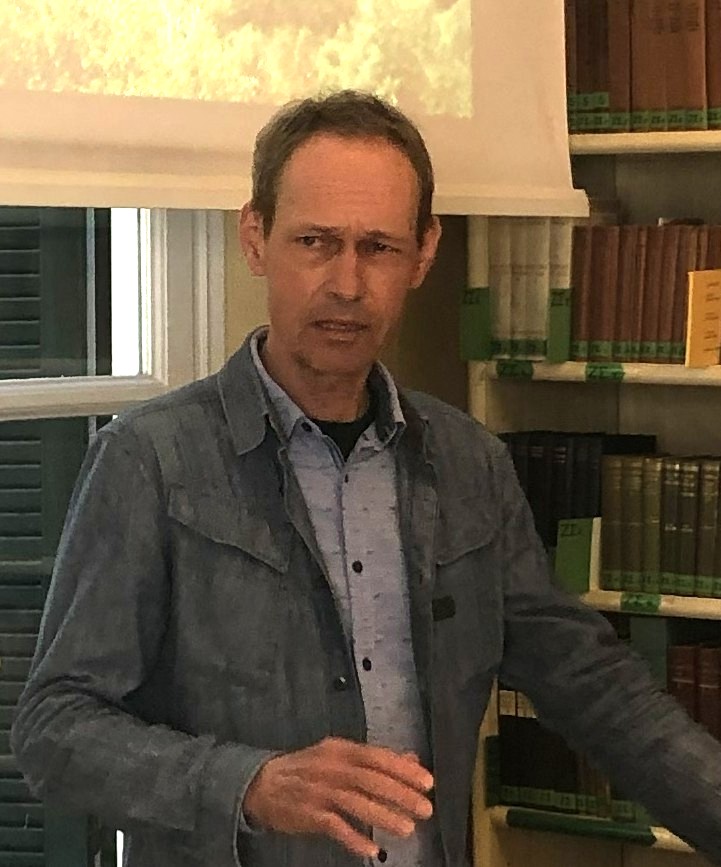
Prof. Dr Gunnar Seelentag, tandem partner 2026

Prof. Dr Gunnar Seelentag

My research explores how norms acquired material presence and social force in the communities of Early Greece. My current projects – most notably ‘In-SCRIBING: Materiality, Mediality, and Social Practice in Early Greek Normative Inscriptions’ and ‘Cartelization: Modelling Sociopolitical Change in Early Greece’ – investigate the emergence, materiality, scale, and architectural embedding of inscriptions with normative content (‘laws’). In critical dialogue with my Estonian colleague Mait Kõiv and the project The Roots of Ancient Greek Democracy, my work reframes early institutional formation not as a sudden democratic breakthrough but as the outcome of selective cooperation, controlled competition, and the materialisation of shared norms within elite and sub-elite communities.