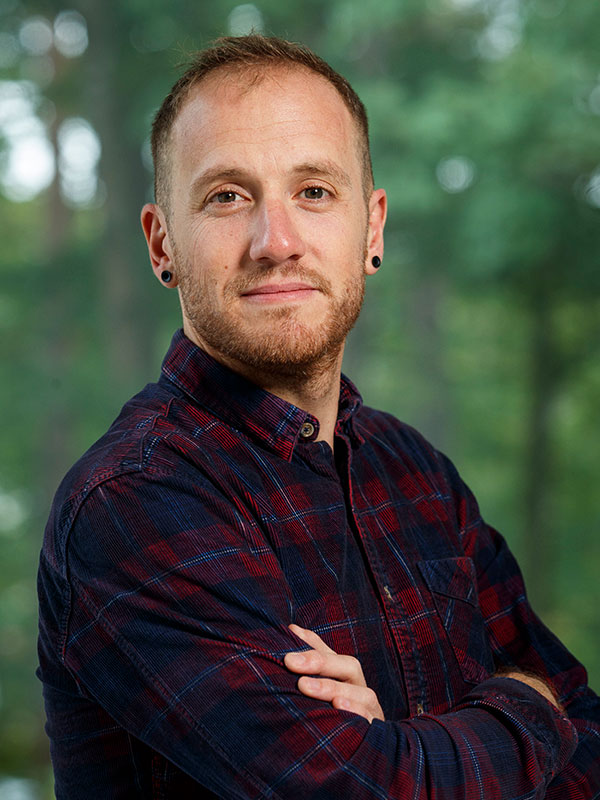
Hugo Bonin, Ph.D.

Hannah Arendt Fellowship 2026 “Democracy”

Junior Fellowship | Theories and Practices of Democracy, Intellectual History, Parliamentary Studies, France & the United Kingdom

Hugo Bonin is a political scientist specializing in the conceptual history of democracy. He previously held postdoctoral positions at the University of Jyväskylä and at Queen Mary University of London, contributing to major comparative projects on political representation and the genealogy of “liberal democracy.” His doctoral thesis, completed jointly at Université Paris 8 and UQAM, examined the historical transformations of the term democracy in Britain (1770–1920). His broader research explores the circulation, contestation, and institutionalization of political concepts across France and the United Kingdom, combining qualitative and digital methods.

He has published widely on democratic theory, liberal thought, and parliamentary discourse, and is the author of “At the sound of the new word spoken” (2024, PUR) and the forthcoming “The Creation of ‘Liberal Democracy’ in France and Britain, 1919-2001: An Intellectual History” (Palgrave).
Personal website
ORCID

Hugo Bonin, Hannah Arendt Fellow 2026

/ Liberal Democracy” in Europe, 1989–2025: Conceptual Transformations and Political Contestations

This project investigates the evolving concept of “liberal democracy” in Europe from 1989 to 2025, a period marked by profound political, intellectual, and social transformations. While the term is now ubiquitous—invoked to defend institutions, critique elitism, or navigate crises—its historical and conceptual underpinnings remain underexplored. This project addresses three key questions: How has the concept been used, debated, and transformed across political, academic, and public arenas? Which actors and networks have shaped its meanings? And how do national specificities interact with broader European and global dynamics?

The research adopts a mixed-methods approach, combining conceptual history, sociology of ideas, and digital humanities. It analyzes three complementary corpora: political discourses (parliamentary records, party manifestos), academic literature (political science, constitutional law), and intellectual magazines (cross-national periodicals). By tracing semantic shifts, rhetorical strategies, and institutional anchoring, the project uncovers how “liberal democracy” has been mobilized—and contested—across France, the UK, Germany, and the Nordic countries, as well as at the EU level.

A central innovation is the integration of computational text analysis (e.g., time-series, collocation analysis, word embeddings) with qualitative interpretation. This allows for both large-scale pattern detection and context-sensitive case studies, revealing how ideas circulate between scholarly debates, political practice, and public discourse. The project also fosters international collaboration, linking Göttingen with experts in Siegen, Brussels, Jyväskylä, and Helsinki, and aims to lay the groundwork for future funding applications, such as an ERC Starting Grant.

By situating “liberal democracy” within its historical and transnational contexts, this project contributes to ongoing debates about democratic resilience, conceptual change, and the interplay between ideas and institutions. It offers timely insights into how a foundational political concept adapts—or fails to adapt—to the challenges of the 21st century.

/ Project Activities 

Host

University of Göttingen, logo

Partner

PD Dr Benjamin Möckel

Benjamin Möckel is a historian and Professor (Vertretungsprofessor) at the Georg-August-Universität Göttingen, where he leads the research group “The ‘Time’ of Democracy. Time Structures and Temporal Discourses in Parliamentary Practice in Germany and France after 1945,” funded by the Gerda-Henkel-Stiftung. He is a specialist of 20th century German and European history, with a focus on transnational and global entanglements. Möckel’s research intersects with the Hannah Arendt Fellowships through his collaboration with Hugo Bonin, examining how democratic ideas are contested and reconfigured across various contexts and eras. His expertise in temporalities of democracy and his role as tandem partner enrich the fellowship’s interdisciplinary dialogue.
