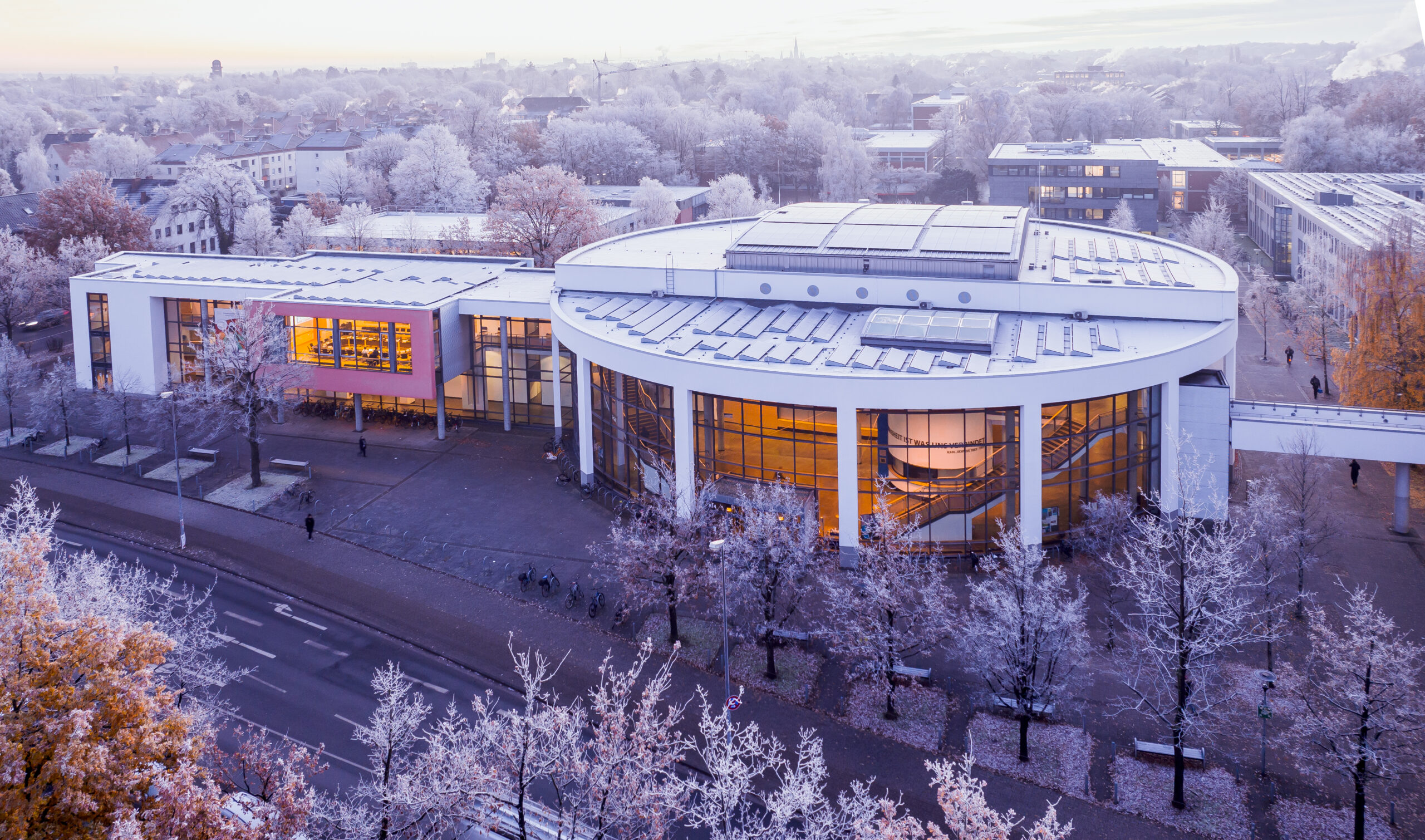
The University of Oldenburg conducts research and provides teaching on the major issues of the 21st century. Founded in 1973, the university boasts around 15,000 students and over 300 partnerships with universities worldwide. In the tradition of its namesake, the democrat and Nobel Peace Prize winner Carl von Ossietzky, it is committed to transparent scholarship with a sense of social responsibility. Welcoming people from more than 130 nations on our campus, we see ourselves as an open university and value the diversity of our students, employees and guests.
The university is home to three clusters of excellence and takes a strongly interdisciplinary approach to research. Its three main topics are Environment and Sustainability, Humans and Technology, and Society and Education. The latter brings together the perspectives of the humanities, cultural studies and the social sciences in order to study diversity, participation, social transformation and subjectification.
Research centres such as Genealogy of the Present and the Centre for Migration, Education and Cultural Studies (CMC) adopt an interdisciplinary approach to transculturality, migration, and future projections. One of the university’s key endeavours is the German-British Prize Papers Project. It is part of the Academies Programme and makes documents from the eponymous collection at the National Archives in London digitally available for research purposes and public access.
The university is home to the Hannah Arendt Centre, which provides access to all of Arendt’s written works. The Karl Jaspers House is a forum for dialogue between the humanities and natural sciences, and the general public. It is hosted by the Karl Jaspers Society and contains the physician and philosopher’s workplace library. The International Office’s Welcome Service provides active support to international researchers interested in spending time at the university for practical matters. Welcome to Oldenburg!