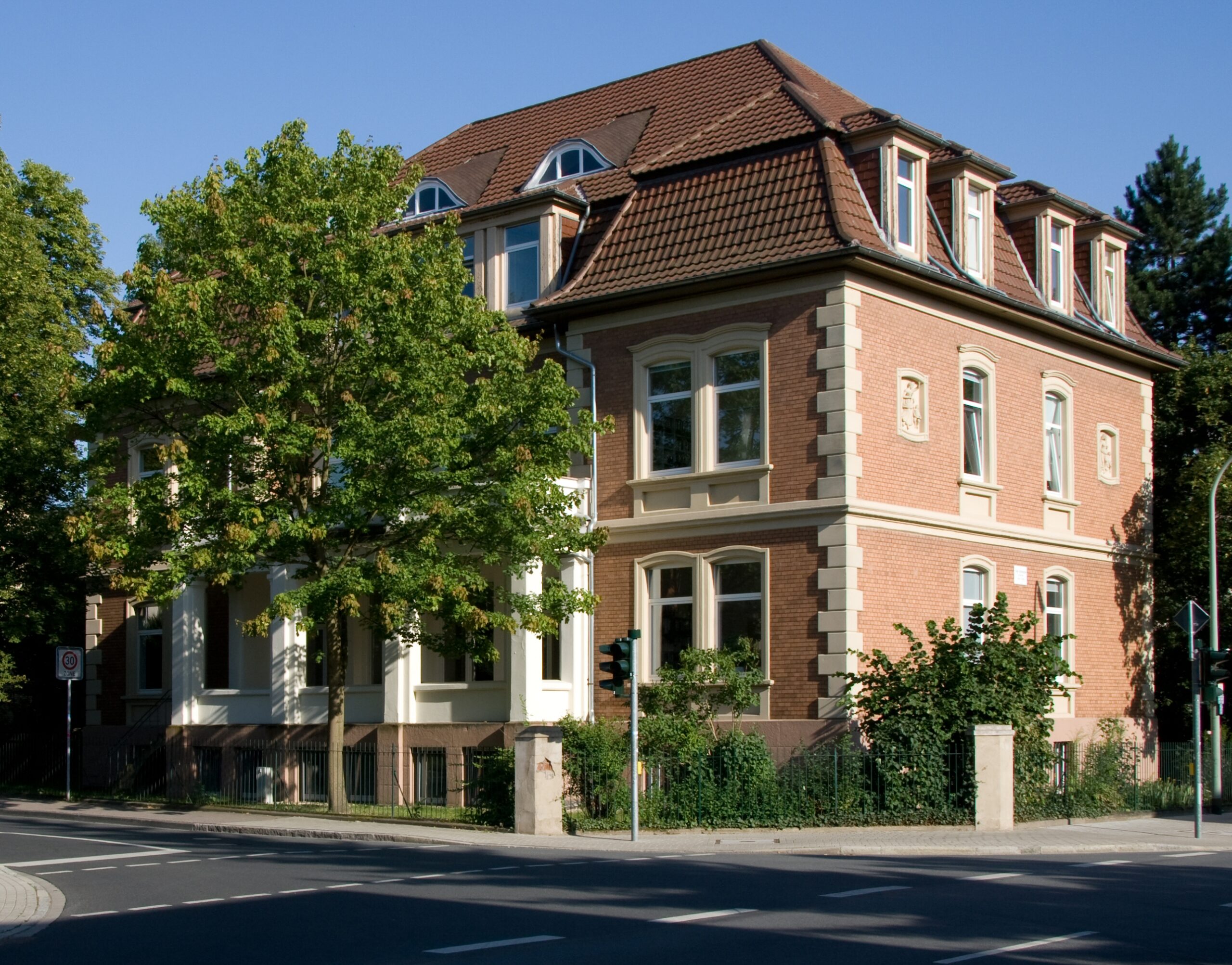
The Sociological Research Institute Göttingen (SOFI) e. V. was founded in 1968 as a registered non-commercial research institution. Since 1983, SOFI is a research institute affiliated with the University of Göttingen and, since 2000 an associated partner of Göttingen Campus.
SOFI conducts research on work, public goods, social cohesion and inequality, thus providing valuable insights for a democratic shaping of society. Its work bridges applied and basic research, addressing key contemporary issues. Recently, sociological research on the effects of the COVID-19 pandemic and the impacts of socio-ecological transformation has been growing in importance. Another established research focus and core element of SOFI’s profile is the study of “Soziale Orte” (translates to “Social Places”). These refer to places, spaces and forms of cooperation at the local level that develop innovative, common-good-oriented formats of social cohesion.
Interdisciplinary research networks are playing an increasingly significant role at SOFI: since 2020, it has been one of eleven locations of the nationwide Research Institute for Social Cohesion (FGZ). In addition, SOFI actively contributes—both in terms of personnel and research—to the COVID-19 Research Network Lower Saxony (COFONI) and the Energy Research Center of Lower Saxony (EFZN).
The institute’s work is structured around three research areas Humanising Work and Employment, Public Goods and Infrastructure, and Work Experience – Way of Living – Inequality, and two cross-cutting focus themes Social Cohesion and Social-Ecological Transformation.